

Advertisements
Nearly 80% of Americans now use mobile or online banking. This change affects how people and businesses manage money in the U.S.
Online banking offers internet access to deposit accounts, transfers, and bill pay. Major banks like JPMorgan Chase, Bank of America, Wells Fargo, Ally, and Chime provide mobile apps. It allows round-the-clock account access, fewer branch visits, and faster transfers like Zelle.
The benefits of online banking go beyond convenience. Users get budgeting and savings tools, easier bill payment, and lower costs than branch services. Industry data show more people trust secure digital platforms and use mobile banking.
This article is a how-to guide for U.S. customers and businesses considering online banking. It will cover convenience, security, and cost efficiency. Later sections discuss interfaces, financial tools, account setup, payments, integrations, environmental impact, and learning resources.
Advertisements
Key Takeaways
- Online banking benefits include 24/7 access, instant transfers, and fewer branch visits.
- Benefits of online banking services cover cost savings and powerful budgeting tools.
- Why use online banking: convenience, speed, and broad integration with apps and services.
- Online banking perks apply to both consumers and businesses across the United States.
- Major banks and online-only firms offer varied platforms to match different needs.
Convenience of 24/7 Access
The convenience of online banking changes how people manage money every day. Customers can handle urgent needs or routine tasks anytime without waiting for branch hours. This flexibility helps busy families, remote workers, and small business owners with daily money matters.
It reduces friction and supports cash flow outside usual banking times. People gain freedom to manage finances on their own schedule.

Anytime, Anywhere Transactions
Online banking allows deposits, transfers, bill pay, and person-to-person payments any hour. ACH and wire transfers manage larger transactions smoothly. Mobile check deposit lets users add funds with their phone camera.
Instant transfers via Zelle or Venmo provide quick cash when it’s urgent. These services remove the need to visit a branch. This saves travel time and helps businesses operate evenings or weekends without delays.
Mobile Banking Applications
Mobile banking apps from Chase Mobile, Bank of America, and Wells Fargo offer powerful features. Digital banks like Ally and Capital One include biometric login, Face ID, and fingerprint access for quick sign-ins. Apps also use mobile check deposit, push notifications, transaction alerts, and secure session timeouts to protect accounts.
Users should check app store ratings and keep apps updated for security and new features. This shows why online banking is popular: convenience with strong protections.
ATM Locator Services
ATM locator tools help customers find fee-free machines and check surcharge details. Bank apps often link with Google Maps to show nearby ATMs and their hours. Networks like Allpoint and MoneyPass offer no-fee withdrawals for account holders.
Useful tips include enabling notifications, using trusted Wi-Fi or cellular networks, and verifying ATM networks before withdrawing. Use bank-locator tools to avoid fees and plan cash needs better.
Enhanced Security Measures
Digital banking’s benefits are clear when security keeps up with convenience. Banks and fintechs invest in layered defenses. These protect customers without adding friction.
The next paragraphs outline key technologies and steps that make online accounts safer for daily use.
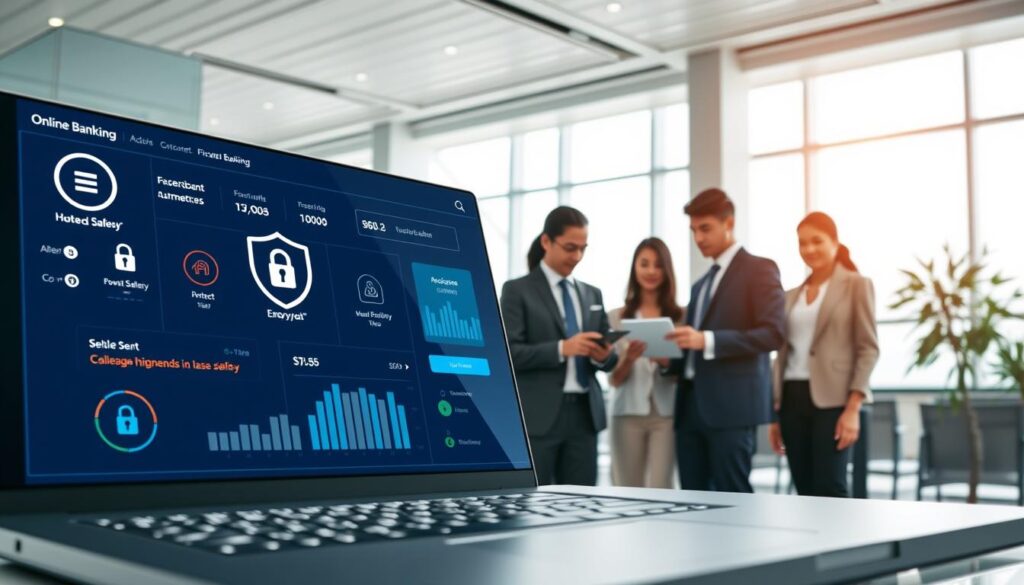
Encryption Technology
Banks use TLS/SSL to secure web and app sessions. Login pages and transactions show HTTPS and a valid certificate.
Data at rest is encrypted with strong algorithms to protect stored records. Tokenization replaces card numbers with one-time tokens during payments.
This reduces exposure of sensitive details. Major institutions explain end-to-end encryption on their security pages. They show how certificates protect credentials and data.
Two-Factor Authentication
Two-factor authentication sharply cuts the risk of account takeover. Methods include SMS codes and authenticator apps like Google Authenticator.
Hardware security keys support FIDO2 standards. Many providers allow biometric logins tied to the device for extra security.
Fraud Monitoring Systems
Fraud monitoring systems run 24/7 to spot unusual activity. Machine learning models detect anomalies in transaction patterns.
Geolocation checks, device fingerprinting, and velocity checks add context to actions. Banks like Capital One use alerts and transaction blocking to prevent losses.
Many debit and credit accounts have zero-liability policies and fraud protection guarantees for unauthorized transactions.
Best Practices and Protections
Consumers should use strong, unique passwords. They also need to update apps and devices regularly.
Enabling two-factor authentication and biometric login improves security. Avoid public Wi-Fi or use a trusted VPN. Review account activity often to catch issues early.
Regulatory Context
U.S. protections under the Electronic Fund Transfer Act and Regulation E give consumers rights for unauthorized electronic transfers. These rights apply when issues are reported promptly.
Combined with the technologies above, these rules help make online banking trustworthy for routine transactions.
Benefit Frame
When security measures combine with user caution, many customers find online banking as safe as traditional branches.
This balance of protection and convenience highlights digital banking advantages for everyday money management.
Time and Cost Efficiency
Online banking saves both time and money for consumers and businesses. Tasks like balance checks and transfers require no travel. Small business owners also save hours on payroll and vendor payments without branch visits.
Reduced Travel Time
Customers avoid trips to branches for simple services. Mobile check capture and instant transfers allow tasks from home or while traveling. Firms save time with remote approvals and batch payments.
Lower Fees and No Minimum Balances
Many online-only banks like Ally, Discover Bank, and Chime offer lower fees and no minimum balances. These banks pass savings to users with competitive APYs and lower loan rates.
Electronic transactions reduce costs compared to in-person cash and check handling. Remote deposit capture and ACH transfers cut fees and remove courier costs for businesses.
When choosing a bank, compare fees, ATM reimbursement, interest rates, and maintenance rules. Businesses should also check online treasury tools for managing cash efficiently.
These savings mean more disposable income for customers and lower costs for businesses. Online banking offers clear financial benefits over traditional banking methods.
User-Friendly Interfaces
Banks and fintechs invest heavily in design to make online tasks feel simple. Clear menus and large buttons for transfer, deposit, and bill pay cut learning time for new users. These interfaces lower mistakes and make routine banking quick for people with different tech skills.
Simplified Navigation
Good navigation follows obvious patterns: dashboard at the top, key actions within one tap, and a persistent search bar. Quick access to transfers, mobile deposit, and bill pay shrinks task time. Contextual tooltips and in-app walkthroughs guide users through wire transfers and recurring payments without leaving the screen.
Accessible design includes screen reader compatibility, adjustable font sizes, and high-contrast modes. These features reach older adults and people with vision differences. Language options and clear iconography remove barriers for diverse U.S. populations.
Customizable Dashboards
Dashboards that let users pin favorite accounts and reorder tiles boost efficiency. Quick action buttons, spending snapshots, and savings widgets put vital data up front. Many banks and fintech apps let customers set default accounts and save frequent payees to speed repeat tasks.
Customizable dashboards pair well with demo modes and trial runs. Trying a demo, reading app reviews, and testing transfers, bill pay, and deposits before moving funds helps users feel confident. Secure messaging and chatbots provide help when a task gets complex.
Well-designed interfaces deliver measurable usability benefits. They speed routine tasks, reduce mistakes, and raise satisfaction for retail customers and businesses alike. These advantages make online banking perks and digital banking benefits real in daily use.
Financial Management Tools
Online banking now includes many financial tools. These tools help people and small businesses manage their money better. They turn raw transactions into clear actions for budgeting and saving.
Budgeting Features
Banks and platforms offer budgeting features that automatically categorize transactions. Users set monthly budgets for categories like groceries and utilities. They can link accounts to Mint (Intuit), Quicken, or use tools inside Bank of America or Chase.
Alerts notify customers when spending approaches limits. This helps keep spending on track without guesswork.
Spending Analysis Reports
Automated reports show spending trends with dashboards and merchant breakdowns. These reports highlight recurring charges and unusual activity. They help users find savings and spot unexpected fees.
Clear charts and summaries make acting on these insights simple.
Goal Setting Mechanisms
Users can set savings goals for emergency funds, vacations, or big purchases. Round-up programs like Acorns or Chime save spare change to a sub-account. Automated transfers and progress trackers show milestones and when goals may be reached.
Small businesses gain when these tools link with accounting software like QuickBooks and Xero. Reconciliation features cut bookkeeping time and simplify tax preparation. This improves cash-flow visibility for owners and bookkeepers.
Privacy and data use remain important. Banks publish privacy statements about transaction data and third-party connections. Customers should review permissions before linking apps to control shared information.
Quick and Easy Account Setup
Opening an account no longer needs a branch visit. Many banks and online-only providers let customers finish online applications in minutes.
This speed offers clear benefits for customers who want to move funds, pay vendors, or set up savings without delay.
Online applications guide users through checking, savings, and business account steps. Users enter basic details, provide a Social Security Number, and upload documents.
Digital ID checks, photo ID capture, and selfie verification confirm identity to meet KYC and AML rules.
Streamlined onboarding steps
Forms focus on essential fields. They allow uploading driver’s licenses, articles of organization, or EIN paperwork.
Third-party identity verification speeds validation while keeping compliance. Knowledge-based authentication adds security for high-risk cases.
What instant approval looks like
When identity and eligibility clear, many institutions give immediate account details. New customers receive account numbers, routing info, and temporary debit card data inside the app.
Funding the account by ACH or debit/credit card often allows immediate use.
Business accounts need extra checks. Platforms like BlueVine and Novo verify EINs, ownership documents, and may manually review complex ownership.
These checks can add time but still speed onboarding compared to traditional methods.
Verification methods vary by bank. Common methods include photo ID capture, selfie matching, and knowledge-based questions.
Reputable third-party verifiers help meet U.S. banking compliance for Know Your Customer and anti-money-laundering rules.
Customers should confirm FDIC or NCUA coverage and use secure connections when sending sensitive data.
Keeping records of disclosures and terms helps fix issues if questions arise after opening an account.
Quick account setup reduces obstacles for people switching banks, opening savings accounts, or enabling small businesses to accept payments.
This leads to faster access to financial services and quick online banking benefits for customers.
Streamlined Bill Payment Processes
The ability to pay bills from one place saves time and reduces stress. Many banks and credit unions bundle payees, confirmations, and payment histories on a single screen.
This centralized view supports streamlined bill payment. It highlights online banking perks for both consumers and small businesses.
Automatic scheduling keeps routine obligations on track.
Automatic payments let users set recurring transfers for rent, utilities, subscriptions, and mortgages.
Customers can schedule ACH debits or link accounts to third-party billers, such as utility companies or streaming services.
Using automatic payments cuts late fees and helps maintain a reliable credit record.
Businesses can benefit from locked payment dates for payroll and vendor invoices. Approval workflows and role-based controls add oversight.
Admins can limit debit amounts and pause or cancel scheduled disbursements when needed.
Reminders reduce missed payments and failed transactions.
Digital payment reminders arrive by email, SMS, or push notification.
Users pick timing and frequency so alerts come days before due dates. Alerts can note low balances or failed attempts and link to calendar apps or task lists.
These reminders help customers avoid service interruptions. They improve cash-flow predictability for firms with scheduled receipts and outgoing payments.
Security, control, and record keeping stay within one platform.
Centralized bill-pay stores confirmations and e-statements for easy review.
Authorization controls let account holders set spending caps and multi-step approvals.
Users keep control by reviewing scheduled payments, setting buffer balances, and responding to failure alerts.
Cost and time savings are measurable.
By cutting postage, check handling, and late fees, digital workflows deliver clear savings.
Automatic payments and digital payment reminders free up staff time.
For households, online banking perks mean fewer missed payments and less administrative hassle.
Practical guidance suggests regular reviews of scheduled transfers, keeping a small buffer in the account, and enabling alerts for payment failures.
These steps preserve service continuity and maximize streamlined bill payment features.
Integration with Other Services
Online banks now combine many financial tools into a single view. This helps users see cash flow, investments, and receivables clearly. People and firms make decisions faster when banking, investing, and bookkeeping share data securely.
Linking investment accounts makes moving money easy. Firms like Vanguard, Fidelity, and Charles Schwab let customers link checking or savings accounts for quick transfers.
They also support dividend reinvestment and automatic IRA deposits. Having one net worth view cuts down on manual tracking and speeds up rebalancing.
APIs sync financial apps with personal and business software. Tools like Mint, Plaid, QuickBooks, and Xero bring transactions into neat, categorized reports.
Small businesses save time with accounting, and accountants get cleaner records for taxes and payroll. These connections improve accuracy and efficiency.
Open banking and API platforms expand fintech options in the U.S. Consent-based links let users share data securely with third-party apps. Embedded finance on commerce platforms combines lending, payments, and cash management in one workflow.
This helps merchants and service providers manage finances more easily. For businesses, online banking works best when payroll, invoicing, and payment processing connect. Integrations with Square, Stripe, and PayPal automate receivables and match bank data.
These links cut down manual entries and improve cash forecasting for small to mid-size companies. Security and permissions are key when allowing third-party access. Users must review app permissions and remove unused connections.
Choosing trustworthy aggregators that follow data-security rules is important. Strong controls keep accounts safe while keeping the benefits of integration. Integration acts as a multiplier, boosting the value of online banking features.
Centralized views, automated workflows, and synced tools help people and businesses make smarter choices with investments and cash management.
Environmental Benefits
Adopting online banking offers clear environmental benefits while improving daily banking tasks. Digital delivery reduces paper use and speeds up access to records. It also makes it easier for customers to store and find statements and tax documents.
Paperless Statements
Choosing paperless statements cuts paper use and lowers mailing needs. Banks such as Chase and Bank of America offer searchable PDFs and secure document centers. Customers can download statements and tax records instantly.
Searchable files make recordkeeping easier for users. They spend less time filing and more time managing their finances. Electronic delivery also speeds up tax preparation and supports compliance with record retention rules.
Reduction in Physical Waste
Switching to digital payments reduces reliance on checks, envelopes, and postage. Businesses benefit from electronic invoicing and ACH payments by eliminating manual check runs and paper invoices.
Fewer branch visits and less postal handling lower carbon emissions from travel and mail processing. Banks also report that digital processes cut storage costs and improve disaster recovery with digital backups.
Though data centers consume energy, many invest in energy-efficient servers and carbon-neutral programs. These efforts make waste reduction more meaningful when combined with sustainable IT practices.
| Benefit | Impact on Environment | Operational Advantage |
|---|---|---|
| Paperless Statements | Less paper production and lower landfill use | Faster access to documents; searchable archives |
| Electronic Invoicing & ACH | Fewer mailed invoices and check-related waste | Reduced processing time; lower payment costs |
| Reduced Branch Visits | Lower commuter emissions and mail handling | Time savings for customers; lighter branch demand |
| Digital Backups | Minimized need for physical storage space | Improved compliance and disaster recovery |
| Sustainable Data Centers | Offsets data processing emissions | Supports long-term carbon reduction goals |
To boost benefits, set electronic delivery as the default. Use encrypted cloud storage and bank document centers for archiving. These steps speed access and reduce administrative work.
Access to Educational Resources
Online banking now offers more than transactions. It provides a rich library of learning tools. Customers find materials on savings, credit management, investing basics, and business finance.
These resources make online banking more practical. They turn complex topics into short, usable lessons.
Online Workshops and Webinars
Banks and fintech firms offer free or low-cost online workshops. Topics include budgeting, fraud prevention, retirement planning, and small business finance.
Examples are Chase’s Financial Education Center, Bank of America’s Better Money Habits, and Fidelity’s investor education offerings. These sessions often have live Q&A and recordings for later viewing.
Users can attend in real time or learn on their own schedule.
Informative Articles and Guides
Most institutions have centers with guides, blog posts, calculators, and video tutorials. Customers use mortgage and savings calculators and read how-to articles.
Personalized learning delivers tips and course suggestions based on account behavior. This helps people improve credit, save more, or reduce fees.
Specialized content supports small businesses with payroll webinars, tax articles, and payment processing guides. Materials are searchable and integrated into apps for easy access.
Users can learn while performing tasks. This access boosts financial literacy, empowers better decisions, and grows online banking benefits for everyone.