

Advertisements
One in three Americans lives in a county that faced a federally declared disaster in the past five years. This fact shows that timely emergency aid programs can decide recovery or collapse.
This guide explains current resources for individuals, families, and small businesses seeking disaster relief. It covers federal groups like the Federal Emergency Management Agency (FEMA), the U.S. Small Business Administration (SBA), and the Department of Health and Human Services (HHS). These groups work together to coordinate emergency response and program openings after disasters or health emergencies.
Nonprofit responders such as the American Red Cross, the Salvation Army, local community action agencies, and Feeding America food banks provide immediate help on the ground.
The programs include financial assistance, short-term housing support, food aid, medical and mental-health resources, small business grants and loans, plus longer-term recovery options.
Advertisements
The guide helps readers quickly find needed resources. It includes clear definitions, types of aid programs, eligibility rules, and step-by-step application methods (online, in-person, and phone).
Specialized help for disasters or medical crises, tips for finding local responders, common misconceptions, success stories, and future changes are covered too.
For the latest declarations and openings, readers should check FEMA.gov, SBA.gov, state emergency management sites, and local government portals. This ensures they know available programs and deadlines.
Key Takeaways
- Federal agencies—FEMA, SBA, and HHS—lead many emergency aid programs after official declarations.
- Nonprofits like the American Red Cross and Salvation Army provide rapid disaster relief assistance on the ground.
- Available aid covers money, housing, food, health care, and small business support.
- This guide shows how to find programs, check eligibility, and apply online, in person, or by phone.
- Keep up to date via FEMA.gov, SBA.gov, and state or local emergency management portals.
Understanding Emergency Aid Programs

Emergency aid programs provide fast relief and stabilize people after sudden crises. These programs work after hurricanes, disease, mass layoffs, or personal disasters. Federal agencies, state offices, and nonprofits join forces to deliver help where needed.
What Are Emergency Aid Programs?
These programs offer cash help, temporary housing, food aid, emergency medical care, and mental-health crisis support. Small-business help and long-term disaster recovery programs also exist for bigger problems. Many programs start after disaster declarations that unlock federal funding from FEMA, SBA, or health departments.
Key Benefits of Emergency Aid Programs
Emergency aid covers essential needs like food, shelter, and medical costs right away. Quick help lowers the risk of long-term housing loss and financial collapse. It also allows faster sending of supplies and personnel in affected areas.
Organizations like the American Red Cross, United Way, and Catholic Charities work with state emergency centers. They match local needs with aid through VOAD networks. Crisis help includes case management and mental-health support during recovery.
There are limits. Some nonprofit aid depends on fundraising, so help can be scarce. Federal programs need formal declarations and follow strict timelines. Short-term help may turn into multi-year recovery when damage is severe.
Types of Emergency Aid Programs
A range of emergency aid programs supports people and communities after crises. Federal agencies, state governments, and nonprofits share roles.
Federal options connect to declarations and long-term funding. States fill gaps with local benefits. Community groups give immediate help on the ground.
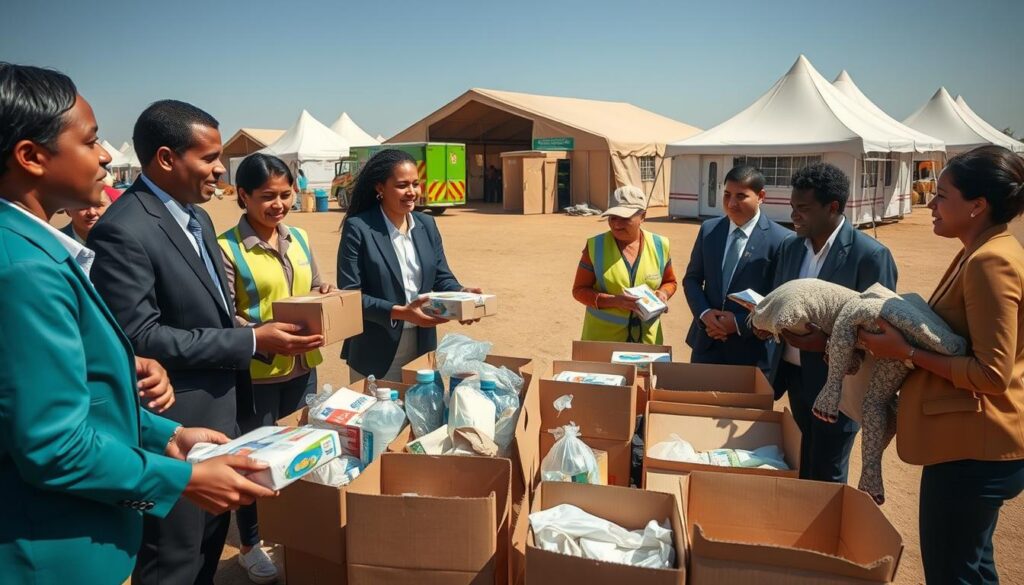
Federal Emergency Aid Options
Federal programs often activate after a major declaration. FEMA Individual Assistance offers temporary housing, housing repair grants, crisis counseling, and other immediate help.
FEMA Public Assistance funds debris removal, emergency protective measures, and infrastructure repair for governments. The Small Business Administration gives low-interest disaster loans to homeowners, renters, and businesses.
The Department of Health and Human Services deploys emergency public-health programs that support medical surge capacity. They also distribute vaccines or treatments. HUD’s Community Development Block Grant helps long-term community recovery efforts.
State-Specific Emergency Programs
States run emergency management agencies to provide rental help, emergency unemployment benefits, and temporary shelters. Programs vary by state and event. Some states offer disaster cash assistance for families’ urgent costs.
California activates CalDRI in disasters to help immigrants without federal aid access. Texas activates the Division of Emergency Management and state Small Business Assistance Centers after storms.
State-run 211 services and emergency command centers gather resources. They guide people to local assistance portals.
Nonprofit and Community-Based Aid
Nonprofits often provide fast, local support. The American Red Cross offers emergency sheltering, meals, recovery casework, and financial help, working with FEMA. The Salvation Army supplies feeding programs, clean-up kits, and shelters.
Food banks and the Feeding America network run emergency food and meal programs. United Way and community action agencies offer short-term rent and utility help and organize outreach.
Faith-based groups and mutual aid networks deliver transportation, volunteer services, and donation-driven help. Federal, state, and nonprofits complement each other in disaster aid.
Federal programs manage large recovery and funding. States adapt resources to local needs. Nonprofits provide immediate relief while community groups support long-term recovery.
Eligibility Criteria for Emergency Aid
Eligibility for emergency aid programs varies by funder and the crisis type. Federal, state, and nonprofit sponsors have different rules based on disaster declarations and household needs.
Applicants need to check program details early to avoid missed deadlines and delays.
Income limits often play a key role. Many housing and rental assistance programs prioritize low- and moderate-income households.
Some recovery funds focus on community metrics like Area Median Income. FEMA Individual Assistance centers on damage and need without strict income caps, though some means testing applies.
Income Requirements
Programs such as HUD’s CDBG-DR target low- and moderate-income communities for long-term recovery.
Nonprofit funds from groups like United Way set thresholds tied to AMI or documented hardship from the event.
Applicants should gather pay stubs, recent tax returns, or other income proofs.
Small businesses seeking SBA disaster loans must provide detailed financials and tax records. These prove economic impact and repayment ability.
Documentation and Application Process
Common required documents include photo ID, proof of residence, Social Security number, and records of disaster-related loss.
Useful evidence can be photos, contractor estimates, and insurance denials. Missing paperwork can stall or disqualify an application.
FEMA applicants register at DisasterAssistance.gov or by phone. They must provide personal details, damage descriptions, insurance info, and identity proof.
SBA loan seekers complete loan forms and submit financial statements, tax returns, and collateral documents when needed.
Nonprofit intake tends to be simpler. These groups often ask for ID, residency proof, and a brief needs statement.
Case management referrals through 2-1-1 and local emergency managers may speed access to aid.
Special populations face unique barriers. Undocumented immigrants may find federal aid limited but access many state and nonprofit options.
People with disabilities should request accommodations early to ensure full participation in application and assessment.
| Program Type | Common Income Rule | Typical Documents | Where to Apply |
|---|---|---|---|
| Federal Individual Assistance (FEMA) | Needs-based; limited means testing in some cases | Photo ID, proof of residence, damage photos, insurance info | DisasterAssistance.gov or FEMA phone lines |
| HUD CDBG-DR | Targets low- and moderate-income communities | Income verification, proof of loss, property records | State housing agencies managing recovery funds |
| SBA Disaster Loans | Credit and ability-to-repay review; not income-limited | Tax returns, financial statements, loan forms, collateral details | SBA disaster assistance portal or local SBA office |
| Nonprofit Emergency Funds | Often tied to % of AMI or demonstrated hardship | ID, proof of residency, brief needs statement | Local nonprofits, United Way chapters, humanitarian aid organizations |
| State and Local Programs | Varies by state; may mirror federal rules | Combination of federal and state documents, damage proof | State emergency management or local relief offices |
How to Apply for Emergency Aid
Before starting an application, confirm which emergency aid programs are active for your event. Gather all required documents beforehand. This helps speed up your application process.
Common steps include registering with central portals such as DisasterAssistance.gov. You should also check state emergency management sites. Calling 2-1-1 can provide local referrals for help.
Keep copies of IDs, insurance papers, and proof of loss. These support faster processing and help with appeals if needed.
Online Application Steps
FEMA applicants must create an account at DisasterAssistance.gov or use FEMA’s mobile app. Then, complete the online form and upload necessary photos and documents.
Save your confirmation numbers. Taking screenshots of submitted pages is also a good idea to track your application.
Small businesses apply for disaster loans through disasterloanassistance.sba.gov or the SBA customer portal. Prepare financial records like tax returns and balance sheets to ease the review.
State portals and nonprofit intake pages accept forms for state-specific aid and services. United Way and local community groups often use partner platforms to route applicants.
Always use a secure internet connection. Review your privacy settings before sharing sensitive files online.
In-Person Assistance Resources
Disaster Recovery Centers (DRCs) and local social services offices offer face-to-face help. Staff can review your documents and assist with completing forms.
They also explain next steps for housing, rent, and utility support. This personal help can be very useful after a disaster.
Organizations like the American Red Cross and the Salvation Army run field sites. These sites provide shelter, meals, and referrals to other services.
Caseworkers guide applicants to crisis intervention and emergency response resources. They help when immediate needs arise after a disaster.
Bring original documents and copies with you. Arrive early and expect some wait times. Request printed confirmation or a checklist for follow-up items to stay organized.
Phone Application Process
FEMA registration is available by phone at 800-621-3362. TTY support is at 800-462-7585 for those with hearing impairments.
Multilingual assistance helps non-English speakers complete applications or check status updates. This ensures everyone can access help.
SBA hotlines provide guidance on disaster loans and application status. State and local hotlines offer numbers for housing, rental aid, and crisis help.
Use 2-1-1 as a central referral point for many community outreach programs. This number connects you to local resources quickly.
Record call dates, representative names, and reference numbers during phone calls. Ask for follow-up instructions in writing and note all appeal deadlines. This is important if your application is denied.
Emergency Aid for Individuals and Families
The following guidance helps families and individuals find quick help after a crisis. It covers cash support, food aid, and crisis intervention resources. Short summaries explain who qualifies and what to bring when applying.
Financial Assistance Programs
FEMA’s Individual Assistance grants can pay for temporary housing, home repairs, and other needs that insurance does not cover. These grants aren’t loans and do not require repayment.
State disaster cash assistance and nonprofit funds from United Way or community foundations offer short-term help for rent, utilities, transport, or childcare. Case managers often coordinate these payments to avoid overlap.
Temporary Assistance for Needy Families (TANF) and SNAP sometimes provide emergency or expedited benefits when emergencies are declared. State SNAP offices can activate Disaster-SNAP (D-SNAP) for people who usually don’t qualify.
The Small Business Administration (SBA) provides disaster loans that must be repaid. These loans suit long-term recovery. FEMA grants provide direct help for immediate needs.
Food Assistance Resources
SNAP emergency allotments and D-SNAP provide food benefits for disaster-affected households. State agencies announce eligibility periods and distribution sites during responses.
Feeding America food banks and local pantries run emergency distribution sites, mobile pantries, and meal services. The American Red Cross and The Salvation Army offer meals during active disaster response.
School meal programs, like the National School Lunch Program and School Breakfast Program, may offer grab-and-go or emergency meals during closures.
To access services, contact local food bank websites, call 2-1-1, check with school districts, or reach municipal emergency services. Bring photo ID and proof of residence if required.
Other help includes utility assistance, rent or mortgage relief from state housing agencies, and nonprofits that aid with landlords or utilities. Crisis intervention resources guide families to the best mix of help.
| Type | Primary Providers | What It Covers | How to Apply |
|---|---|---|---|
| FEMA Individual Assistance | Federal Emergency Management Agency | Temporary housing, home repair, other essential needs | Register online or call FEMA; provide ID and damage documentation |
| Disaster Cash Assistance | State programs, United Way, community foundations | Rent, utilities, transportation, childcare | Referral via case manager, local social services intake |
| SBA Disaster Loans | Small Business Administration | Longer-term recovery, home and business repairs (repayable) | Apply online at SBA; submit financial and property documents |
| SNAP & D-SNAP | State SNAP agencies | Food benefits, emergency allotments for affected households | State SNAP office applications or D-SNAP sign-ups at local sites |
| Food Banks & Meal Programs | Feeding America partners, American Red Cross, The Salvation Army | Food boxes, mobile pantries, prepared meals, school meal distributions | Check local food bank schedules, call 2-1-1, or contact school district |
Emergency Aid for Small Businesses
Small businesses facing sudden crises need clear options and fast support. Emergency aid programs can offer cash flow relief and repair funding. They also provide guidance to help firms stay open.
This section outlines key grant and loan options. It also offers practical resources for startups and entrepreneurs.
Grants and Loans for Small Enterprises
SBA Disaster Loans include Economic Injury Disaster Loans (EIDL) for lost revenue and Physical Damage Loans for property repair. These have low interest rates and long repayment terms. Many small businesses, nonprofits, and agricultural entities qualify.
State economic development agencies and federal pass-through grants from FEMA or HUD sometimes fund small business emergency grants after major events. Private-sector relief comes from corporations, foundations, and local chambers of commerce. They add more funding options.
Paycheck Protection Program equivalents have appeared during pandemics. Terms are set by legislation. Businesses should track current offerings and deadlines to access funds quickly.
Resources for Startups and Entrepreneurs
Small Business Development Centers (SBDCs) and SCORE provide free counseling on loan applications, cash flow management, and business continuity planning. They guide entrepreneurs through SBA paperwork and grant searches.
Local economic development agencies host webinars and offer legal aid referrals. These speed application success. Business recovery toolkits provide templates for documenting losses, estimating repair costs, and preparing insurance claims.
Documentation is critical. Maintain thorough financial records, photos of damage, and invoices to support applications. Expedited SBA reviews are often available for businesses in declared disaster zones.
Insurance coordination matters when applying for aid. Document claims and understand how insurance proceeds affect eligibility for disaster recovery programs and small business grants and loans.
- Keep a recovery checklist for claims, loan forms, and tax notes on casualty loss deductions.
- Use chambers of commerce and local alliances to learn about community outreach initiatives and pooled relief efforts.
- Attend disaster-specific webinars to access accelerated application options and expert Q&A.
Special Emergency Aid Programs
When disasters strike or sudden health crises arise, various groups work together to meet urgent needs. These include federal, state, nonprofit, and volunteer efforts. This section outlines options that help people recover housing, access care, and find support.
Aid for Natural Disaster Victims
FEMA Individual Assistance and HUD CDBG-DR programs offer housing support, recovery grants, and rebuilding funds after disasters. Survivors can apply for temporary housing, rental help, and repair grants under program rules.
State health and human services agencies manage disaster casework with nonprofit partners. They guide survivors through housing, benefits, and services to speed recovery access.
Special services include debris removal, shelters, and temporary housing units with local governments. Programs focus on elders, disabled, and low-income households to ensure fair funding.
Humanitarian aid groups and volunteers provide on-the-ground support. The American Red Cross runs shelters, Rebuild Together organizes home repairs, and foundations fund local efforts.
Assistance for Medical Emergencies
HHS emergency funding and surge response deploy supplies from the Strategic National Stockpile in health crises. Hospitals and state health departments coordinate referrals and evacuations when local care is overwhelmed.
Emergency Medicaid and state health coverage expansions cover treatments for uninsured or underinsured during declared emergencies. They help reduce financial barriers to urgent care.
FEMA’s Crisis Counseling Assistance and SAMHSA grants fund crisis counseling and behavioral health after disasters. Local and nonprofit mental health teams provide outreach and support.
Community health centers, emergency rooms, and state health hotlines serve as entry points for medical help. Nonprofit teams like Team Rubicon and MedGlobal aid clinical care and logistics with local partners.
Navigating Emergency Aid Resources
When a crisis hits, finding reliable help quickly matters. This guide points to local options and online tools.
It also offers practical steps for connecting with emergency aid programs, community outreach initiatives, humanitarian aid organizations, and emergency response services.
Finding Local Aid Organizations
Dial 2-1-1 to reach United Way’s helpline for an immediate list of local services. Callers get referrals for housing, food, legal aid, and mental-health support.
State and county emergency management websites list Disaster Recovery Center locations, shelter maps, and local assistance programs. Check those pages after storms or big incidents.
Local nonprofits, faith-based coalitions, and community action agencies manage rent and utility relief plus case management. Chambers of commerce and city halls share business relief details and community outreach info.
Create a short contact list ahead of time or right after an event. Include emergency shelters, food banks, legal aid clinics, and utility hardship phone numbers.
Utilizing Online Platforms for Assistance
Use federal portals like FEMA’s DisasterAssistance.gov and the SBA disaster loan portal for applications and status checks. State emergency management sites offer similar regional info.
Aggregator tools and maps help locate resources. Use FEMA disaster resource maps, local government GIS shelter maps, and Feeding America locators for food banks nearby.
Follow official agency channels on Twitter/X, Facebook, and Nextdoor for real-time updates and volunteer coordination. Verify posts by checking .gov pages or trusted nonprofit sites.
Document damage and costs with date-stamped photos and a simple log. Keep application confirmations and receipts in one folder.
Apps and printable templates help track this information. They improve your chances with humanitarian aid organizations and emergency response services.
Common Misconceptions About Emergency Aid
The aftermath of a disaster often brings confusion about available help. Clear facts reduce fear. They make it easier to access emergency aid programs, crisis intervention resources, disaster relief assistance, and support from humanitarian aid organizations.
Myths vs. Facts
Myth: FEMA gives unlimited money. Fact: FEMA grants are limited and meant for immediate needs, short-term housing, and critical expenses. They do not cover full long-term recovery or replace all losses.
Myth: Undocumented immigrants can’t receive any help. Fact: Undocumented people are usually ineligible for some federal programs. However, nonprofit groups, faith-based charities, and some state or local programs provide support. The American Red Cross and similar aid groups often help without checking immigration status.
Myth: All aid must be repaid. Fact: Some help is grant-based and not loans. FEMA Individual Assistance grants do not need repayment. But Small Business Administration loans and other credit products do require repayment.
Myth: Assistance is automatic after a disaster. Fact: Most programs require registration or an application. Applicants must provide documents and meet deadlines to qualify for funds, case management, or crisis interventions.
Understanding Eligibility Rules
Eligibility depends on program type, whether there is a disaster declaration, residency, and documented loss. Insurance payments can affect grant amounts and loan eligibility.
Deadlines matter. Many programs have strict time frames for applications and appeals. SBA loan cutoffs and FEMA appeal deadlines are examples. Missing these deadlines can cause loss of aid.
Some programs use income and asset tests. HUD and CDBG-DR funding often focus on low- and moderate-income households. Means tests can affect priority and award size.
Applicants should file insurance claims first. FEMA and other disaster programs may lower grants by expected insurance proceeds. Keeping good records of claims and denials helps when reporting losses.
To avoid problems, register early, keep receipts, take photos, and save all correspondence. Seek help from disaster case managers, legal aid, or trusted humanitarian aid groups when eligibility is unclear.
Success Stories of Emergency Aid Beneficiaries
Real people and small businesses show how coordinated response brings relief fast. Federal funds, state help, and nonprofit support often work together. They shorten displacement and restore services quickly.
The examples below summarize typical outcomes. They also highlight lessons for future responses.
Real-Life Impacts of Emergency Aid
A family in Florida got FEMA housing help after a hurricane. A local nonprofit helped them find temporary housing and apply for grants.
Displacement time dropped from months to weeks. Utilities came back faster. Their budgets stabilized enough to plan repairs.
An independent bakery in Texas used an SBA disaster loan to fix its storefront. The loan also replaced inventory.
The owner rehired three employees. This brought payroll back to pre-disaster levels and kept the business running.
Federal grants, state programs, and local aid groups led to fuller recoveries. Grants met immediate needs, state programs handled permits, and nonprofits provided case management.
Highlighting Community Support
Volunteer groups like AmeriCorps and Team Rubicon joined local faith groups. They did home repairs and handed out supplies.
The teams gave emotional support too. This improved wellbeing and sped up household recovery.
Community foundations and corporate disaster funds offered flexible money for unmet needs. They paid for child care, transport, and small repairs to keep families housed.
Best practices came from successful recoveries. These include centralized intake systems like 2-1-1 for referrals, strong local coordination, and robust data collection.
Long-term recovery committees brought together residents, nonprofits, and government. Case management cut duplication and promoted fair aid distribution.
Replicable strategies focus on preparedness, clear communication, and after-action reviews. Outreach and recovery programs using these build resilience and show clear benefits.
Future of Emergency Aid Programs
The landscape of emergency aid programs is changing to provide faster and more flexible responses. Agencies like FEMA and the Small Business Administration are updating digital applications and payment systems. These improvements aim to reduce processing times for disaster recovery assistance.
Mobile apps, digital uploads, and better data sharing help make recovery programs more efficient. They also reduce duplication across agencies.
Policy trends support offering survivors more options. This includes wider disaster cash help and easier SBA loan processes after major incidents.
Public-private disaster funds and partnerships with nonprofits will form flexible funding pools. These pools allow for quick disaster aid deployment. Such changes will improve emergency response and reach vulnerable groups.
Local groups and community leaders stay vital to recovery efforts. Outreach initiatives and mutual aid networks provide culturally sensitive services. Organizations like United Way and 2-1-1 fill gaps in bigger systems.
Investing in training, volunteers, and local case management builds resilience. It also speeds up aid delivery in neighborhoods.
Residents, businesses, and nonprofits can influence future programs by joining recovery planning and public comment. Staying informed through FEMA.gov, SBA.gov, state emergency sites, and local agencies is important.
Preparing documents and linking with local groups improves chances for quick access to emergency aid when it’s needed.